
How Properly Maintained Sanding Blocks Extend Their Life & Optimize Performance
Updated: Aug 19
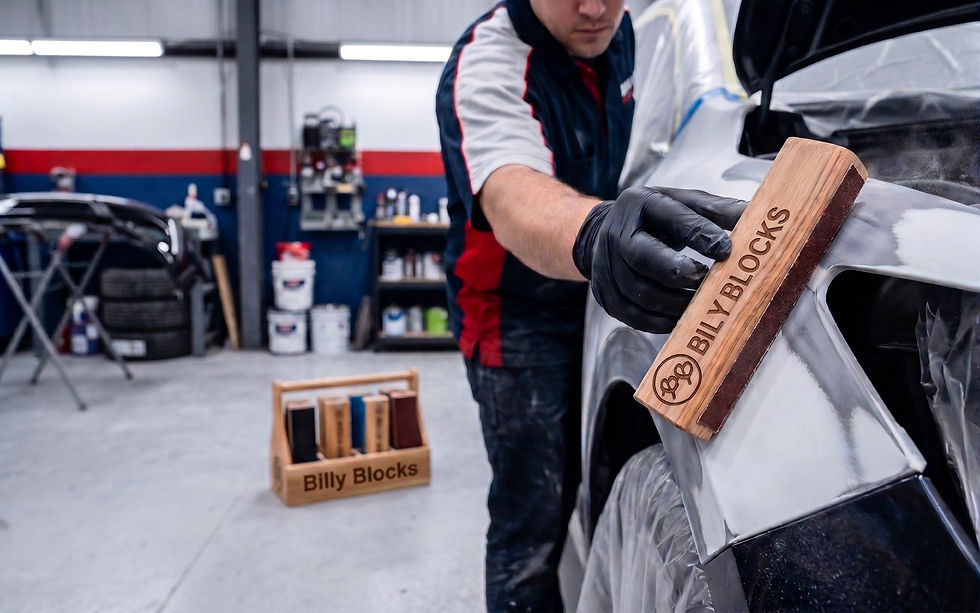
Across countless restoration projects and late-night sessions spent refining raw panels into polished bodies, the humble sanding block remains an irreplaceable ally in auto refinishing. In the hands of an attentive craftsperson, it transforms uneven metal into foundation-smooth surfaces, elevating both efficiency and outcome with every pass. At Billy Blocks in Tuttle, generations of workshop experience come together in each handcrafted wooden sanding block - purpose-built for longevity and precision. Founded on more than fifty years at the bench, this family-owned company crafts American-made blocks that endure years of real work and stand apart from disposable plastics. Proper care extends beyond protecting your investment: it deepens results, lessens environmental burden, and pays respect to tools born from genuine expertise and eco-conscious values. For professionals and hobbyists alike, maintaining these blocks becomes a ritual that honors the lineage of quality - and ensures a consistently flawless finish on every job.
Why Maintenance Matters: Longevity, Precision, and Sustainability
Billy Blocks in Tuttle stands at the intersection of innovation, craftsmanship, and environmental responsibility in auto paint and body tools. With more than fifty years of industry experience reflected in every handcrafted wooden sanding block, the impact of proper sanding block maintenance reaches deeper than most realize. Experience from seasoned pros shows that caring for these eco-friendly auto repair tools builds a tradition of sustainable work habits across generations.
Extending the Life of an Heirloom Tool
Regular cleaning after each project - the simple act of dusting away residue and ensuring blocks are dry - keeps grit embedded in your block from degrading both its surface and the finish on your next job. Seasoned detailers often remark on how a ten-minute cleaning routine reduces the frequency of tool replacement. Observing my own set, I've found blocks crafted by Billy Blocks can serve faithfully for years, unlike plastics that tend to chip or shatter under stress.
Sustaining Precision and Ergonomics
Hand-sanded edges remain smooth longer with light oiling and gentle use, preserving both grip and comfort during intricate work.
The two-sided design, unique to Billy Blocks, supports quick switching between grits. Keeping both surfaces free from caked debris prevents cross-contamination - a crucial factor on show car restorations where perfection counts.
Secure storage - preferably in a dry drawer or magnetic rack - maintains the block's shape and prevents warping, a simple act that safeguards overall performance.
Reducing Waste and Supporting Sustainable Practices
Auto body tool care extends beyond saving money on fewer replacements; it forms part of a commitment to reducing landfill waste common with disposable synthetics. Repeatedly choosing - or maintaining - a Billy Blocks block helps limit consumption and uphold values rooted in handcrafting and renewable materials. The hardwood's non-shattering nature means even heavy use doesn't spell the end for your favorite block.
The cumulative effect becomes clear over years: fewer blocks discarded, consistent workflow without frustrating interruptions, less need to hunt for replacements mid-project. It's not just about getting through today's list - it's establishing a shop culture where masters and apprentices alike take pride in their tools and stewardship of resources. Regular upkeep is the thread that ties together performance, savings, and respect for the legacy of quality American-made hand tools.
Cleaning Techniques: Removing Clogs and Preserving Abrasiveness
Addressing Clogs: Practical Steps for Regular Cleaning
Persistent buildup in sanding blocks - fine dust, caked paint, or adhesive residue - often signals the need for deeper attention between passes, especially under the daily demands of shop work. I've worked beside veterans who swear by a systematic approach, making block cleaning as routine as wiping down panels. With a Billy Blocks hardwood block, clogged abrasives rarely settle in for long, but neglected buildup still erodes both block and finish quality.
Clearing Loose Dust: Gently tapping the block against a bench edge dislodges excess particles without damaging the wood. Many shops rely on short bursts from an air hose - just hold the block away from fresh paintwork and direct the airflow along rather than directly into the sanding face, preserving grit alignment.
Removing Adhesive Residue: Stubborn spots left from sanding double-sided tape can be eased free using a soft nylon brush. Light use of denatured alcohol or citrus-based eco-friendly solvents helps break down residue without risking the finish of hardwood or paint. Avoid soaking; a lightly dampened cloth controls moisture that could cause swelling - even though Billy Blocks's chosen woods resist moisture better than most.
Tackling Grit Clogging: A dedicated rubberized sanding block cleaner, run firmly along the working surface, often lifts stubborn debris embedded in abrasive sheets. For serious cases, some detailers use masking tape to 'lift' fine grains from hook-and-loop faces between sheet swaps.
Caring for Sanding Sheets: Extending Life Without Compromising Performance
Sanding sheets see heavy action in custom work and restoration. Keeping them clean means less swapping and steadier finishes. Most dust shakes off easily when you flex the paper gently across a dowel. Compressed air works here too - direct from behind the sheet to keep abrasive particles functional.
If clogging persists, a light rub with an eraser block or rubber cleaning stick can renew surfaces without stripping grit. Save water-based cleaning only for waterproof papers; avoid strong detergents that break down adhesives or backing. A dry clean means your abrasives continue to bite predictably project after project.
Quick Detachment: Magnetic Block Cleaning Made Simple
Those using Billy Blocks's magnetic blocks notice how quickly cleanup fits into routine. Detach the block from its rack with one hand for a blast of air or wipe-down - then snap it back mid-task. Streamlining these steps saves downtime across even the busiest days in collision repair.
The Real-World Edge: Shop Wisdom and Community Tips
The most effective tricks often come from shared shop floors rather than manuals: one local tech keeps an old toothbrush beside his waxing area to flick stray grit free between grades. Others apply beeswax sparingly on block ends to reduce buildup during marathon hand-shaping sessions - a simple, natural barrier that aligns with eco-friendly auto body tool care traditions.
Sanding block maintenance isn't just about keeping tools functional - it becomes habit through generations of auto body work. Each tip passed around helps another pro or apprentice prolong handcrafted tool longevity while honoring the values behind tools made with care and respect for materials. Those small acts of preservation not only deliver better results but reinforce resourcefulness essential to both craft and environmental stewardship.
Storage Solutions: Protecting Your Investment from Damage and Moisture
Guarding Quality: Storage That Nurtures Ergonomics and Longevity
Humidity swings and the Oklahoma freeze-thaw cycle can catch many in the region off guard. Proper storage shields more than just looks - it preserves the click of solid hardwood against palm, the predictable line held on each panel. I have seen blocks lose their flatness when left too close to a damp garage floor or forgotten in the bed of a truck overnight after a local car show. Blocks that once floated over surface curves warped until even simple sand jobs became slow, uneven work.
Dry It Right Every Time
After cleaning, set blocks on edge or wrack them on a ventilated shelf. Avoid stacking while damp - a common source of moisture spots and bloating in hardwood construction.
Before closing shop, run a dry rag along each block or stand them beneath a gentle air current if humidity lingers in the workshop. Never rush them into an airtight tub when even slightly damp; trapped vapor breeds disappointment come next use.
The Power of Intentional Organization
An orderly system minimizes time spent hunting for blocks and shields them from accidental drops - or crawling legs on cluttered floors. Keep magnetized Billy Blocks blocks within easy reach by attaching them to a dedicated steel rail at eye level or above the workbench. Friends with busy home garages often share stories of discovering misplaced blocks weeks later: squashed under seat rails, warped after hiding too long where condensation creeps in. Investing minutes to build custom racks or partitions for each block shape means favorite tools age with integrity instead of gradual injury.
Billy Bag to Go: For shows or club meetups, soft-sided carriers like the Billy Blocks 'Billy Bag' offer protection against dings and weather without sealing in residual moisture. Use its separate pouches to keep blocks sorted by grit or contour - ready for roadside touch-ups or judging rounds.
If assembling a kit for travel, include silica gel packs slipped alongside blocks in the case - small insurance for Oklahoma's unpredictable storms or summer humidity spikes.
Everyday Habits as Environmental Stewardship
Thoughtful storage isn't only about convenience - it's the craftsman's kind of stewardship rooted in Billy Blocks's eco-friendly auto repair tools approach. Preserving shape, balance, and finish backs up the promise that well-made American tools deserve respect as much as performance. Passing this practice down ensures the next generation inherits both skill and solid tools - blocks ready for work instead of landfill.
Handcrafted tool longevity pays off through small acts: drying, organized placement, regular inspection for hidden splits. Local professionals sometimes hold friendly contests - whose block still runs true after five years? Such pride underpins longevity as much as fit-and-finish every time a customer inspects restored paintwork.
No piece of advice replaces vigilance. Storing right protects investments in craft and carries forward both tradition and environmental care - one shop routine at a time.
Best Practices: When to Replace, Rotate, or Refresh Sanding Surfaces
Deciding When to Replace, Rotate, or Refresh Sanding Surfaces
Billy Blocks's two-sided and multi-profile sanding blocks reflect years of experimentation in keeping a block productive for as long as possible. The principle is simple: by understanding the real signals of wear, you avoid premature discard and replace only what is needed, when it matters. Attention to these details defines veteran auto body tool care - the difference between projects that stall and those that finish with professional consistency.
Recognizing Block and Abrasive Wear: What Demands Attention?
Loss of Flatness or Consistent Pressure: When a sanding block applies uneven pressure or skims instead of biting, check for warping or surface damage. Slight bows or rounded edges can signal hardwood swelling from moisture exposure or wear at grip points. A quick visual comparison along a straightedge clarifies whether your block is aging out of true.
Dull or Glazed Abrasives: Sanding performance drops when abrasives show visible shine, clogging, or patchy bald spots. If the sheet cuts noticeably slower - even after cleaning - it's time to replace. Touch is often the first indicator: that initial 'grab' of fresh grit fades once minerals break down under repeated passes.
Splinters, Cracks, or Surface Pitting: Wooden blocks occasionally develop splintering along edges or shallow cracks on the face. Any tactile roughness not present at purchase deserves immediate review - continued use becomes uncomfortable and risks introducing blemishes in painted finishes.
Rotating and Switching: Extending Usable Life with Billy Blocks Design
The unique benefit of Billy Blocks's dual-sided hardwood block appears on every job requiring frequent grit changes or profile swaps. Instead of changing tools after each step, flip to the second surface - a new grit or contour is ready without stopping workflow. For multi-profile models, aligning curves to the panel's current needs preserves crisp shapes without grinding away at a favorite edge.
This rotation method prevents excess wear settling onto a single face and averages out contact over the entire block. Discoloration isolated to one side flags an opportunity to switch usage patterns, avoiding ruts that lead to permanent indentations. Many professionals alternate surfaces each session, preserving finish quality and block longevity in equal measure.
Refreshing and Replacing: Recognizing End-of-Service Signs
Sanding Sheets: Replace sheets once abrasives dull, backing separates, or repeated cleaning proves ineffective at restoring bite. Remove entirely with a gentle peel - never yank, especially if your block's face was freshly oiled. Inspect the wooden surface for grit remains; brush them clear before installing new abrasive material.
Wooden Surfaces: Should surface splinters or persistent stains emerge after years of loyal work, sand lightly with fine-grit paper (320+) along the grain. Follow up with a wipe of linseed oil or eco-certified wood conditioner - just enough to nourish without saturating the fibers. Lay flat until dry before returning to service.
Community Knowledge: Maintenance Stories that Matter
The Billy Blocks community thrives on collective shop wisdom as much as product design. Some longtime restorers note their oldest blocks last twice as long when surfaces are swapped every few days rather than weeks - a lesson passed during late-night rebuilds over shop coffee. Others maintain logs on abrasive changes during major paint correction jobs, confirming that simple tracking keeps their workflow uninterrupted and waste minimal.
If you have a personal routine for sanding block maintenance - rotating faces, unique cleaning strategies, stories about decades-old blocks kept healthy - we welcome your voice. Each small habit supports our eco-friendly auto repair tools mission and helps prove that thoughtful care builds both results and relationships between craftspeople.
A proactive mindset around replacing, rotating, or refreshing sanding blocks means fewer work stoppages and more consistent finishes on each job that comes through the door. Those extra minutes spent observing wear and acting early show in both the finished surface and the life span achieved from every handcrafted block.
Caring for a handcrafted sanding block is more than routine - it is stewardship of quality, tradition, and environment. Well-maintained Billy Blocks blocks reward steady hands with years of precise, ergonomic service while minimizing waste often seen with disposable tools. Every step - cleaning, rotating, storing dry - extends the usable life of both block and abrasive, conserving resources and supporting the families behind American-made craft. Small daily habits not only ensure your own projects stand out, but also reinforce pride in choosing tools built to last in Tuttle and beyond. Explore the Billy Blocks online shop, join fellow auto body enthusiasts on YouTube for fresh tips and demos, and connect through live chat or email to share maintenance stories or questions. Celebrate the value of thoughtful tool care in both your work and your community.
Comments